As the largest all-female grassroots football club in the country, and one of the largest youth organisations in North Herts, we take our responsibility to our players very seriously.
We already have wellbeing ambassadors in place at some Thursday and Friday night training sessions, and our intention is for there to be one at every training session across our 30+ teams.
Our wellbeing volunteers work closely with players and parents to build relationships and offer support. They provide guidance on topics like periods, nutrition, mental resilience, injury prevention, and more, signposting athletes to specialist practitioners, agencies or resources where needed. Additionally, they support coaches in providing pastoral care during and outside of training sessions.
Physical Wellbeing
The menstrual cycle is incredible and knowing more about it is fundamental to lifelong health and well-being in female athletes.
To use your understanding of the menstrual cycle to your advantage, follow these four steps:
1) Learn what the menstrual cycle is, what’s considered healthy and normal and how best to manage it (check out our information sheets below!)
2) Understand and track your own unique experience of your cycle – there are lots of apps available to help with this
3) Learn what works for you to manage your symptoms
4) Train around your cycle for improved fitness and performance
Food can have a powerful effect on your health; how you feel physically, emotionally and how you perform in training and competition.
Eating well and eating enough is a non-negotiable for great training and performance. If there’s no fuel in the tank, the car’s not going anywhere.
Read more about fuelling your football and get some great recipes to try here.
Relative Energy Deficiency in Sport (RED-S) is when your body doesn’t receive enough energy to meet the demands of training and daily activities.
It can be caused by under-eating, over-training (or a combination of both), or for reasons like emotional stress or trauma. It can lead to your periods stopping, poor mental health, poor performance both on and off the pitch and more. You can read more about RED-S, its symptoms and how to get help here:
Do you know that by wearing a well-fitting sports bra you may be able to achieve a 4% improvement in performance?!
To put this into context, if 2 clones of you raced in a marathon, one in a poorly fitting sports bra and one in a well-fitting sports bra, the clone of you in the well-fitting sports bra would finish a whole mile ahead!
Depending on your breast size, body shape and what activity you are doing, there will be a best bra stye for you. There are three styles of sports bras:
1) Compression (crop tops) – may be a good introduction to sports bras for small or developing breasts in puberty – this type of bra squashes the breast tissue against your chest, reducing movement.
2) Encapsulation – best for reducing breast movement and the only style recommended for large-breasted women (D-cup and above)- designed so that each breast is supported separately, this type of bra is made from sturdy, supportive fabric. It will usually have an adjustable back fastener on the underband and adjustable shoulder straps. Some encapsulation bras are underwired.
3) Combination – good for large breasts – as the name suggests, this bra is a combination of the two styles above. Two separate cups to encapsulate each breast, covered with an external layer to compress the breast tissue. These types of bras help reduce movement and alleviate breast pain more effectively than the other styles individually.
Being female is a risk factor for concussion – females are twice as likely to suffer a sport related concussion, yet less likely to have a concussion recognised on the field of play.
Females have smaller heads, lower neck strength, and longer and thinner brain cells than males, and the menstrual cycle may influence severity of concussion and recovery time.
This is about more than just heading the ball. Only 13% of impacts to the head and body in football are due to heading. Angled hits to the head or body from other sources are more prevalent.
Research has found that taking quick action to remove an athlete from play when a concussion has occurred, and seeking immediate medical care reduces concussion symptoms and ultimately gets the player back in action sooner.
We can all play our part in identifying a potential concussion – players, parents, coaches and referees. if a player is suspected of having concussion, they must be immediately removed from the pitch, whether in training or match play.
Familiarise yourself with the visible signs and other symptoms of concussion and alert the referee or coaches immediately if you suspect a player may have suffered a concussion.
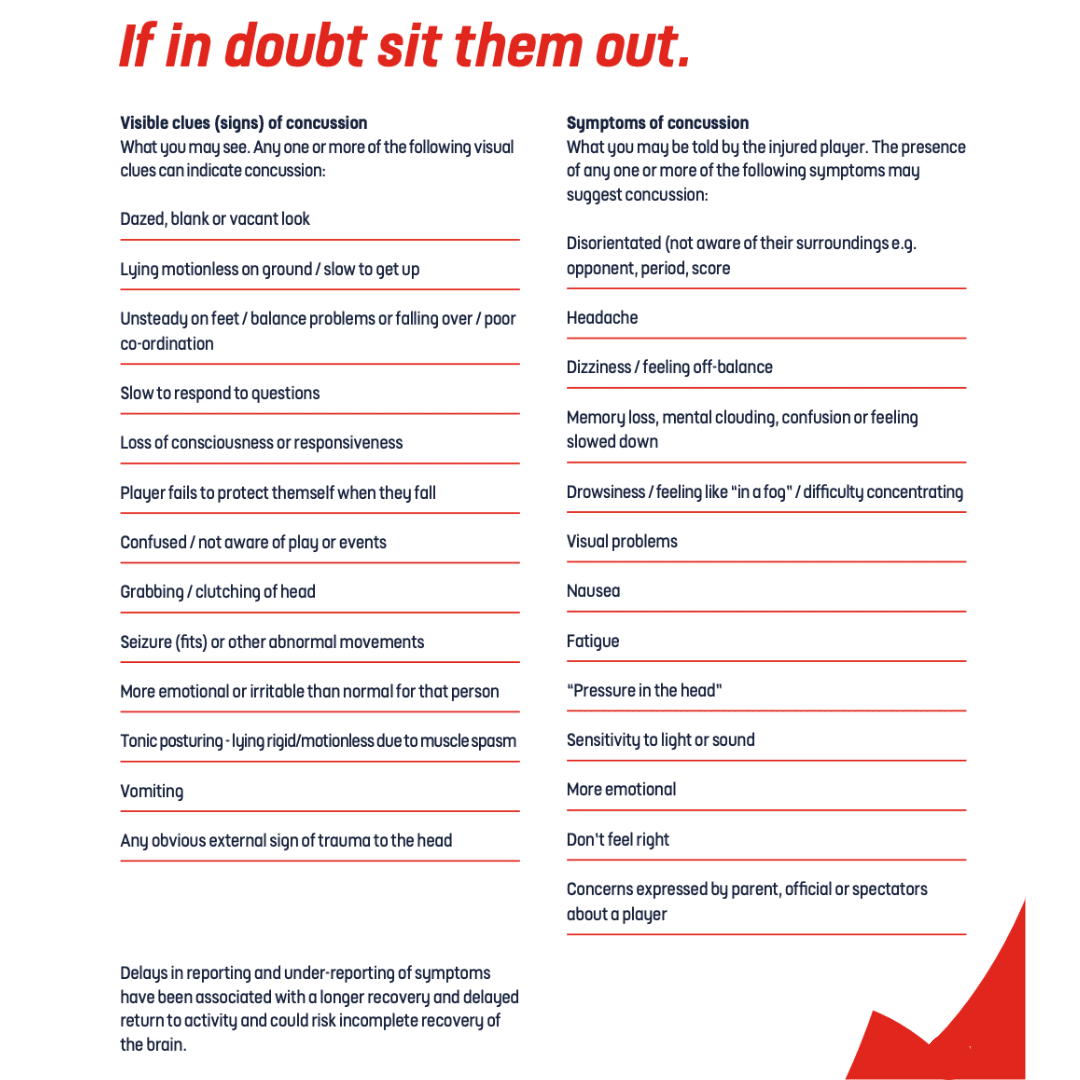
When a suspected concussion has occurred, immediate medical care should be sought
If you’re an active person rest and recovery are just as important as your training. They give your body the time it needs to repair, rebuild, and get stronger, which helps you perform better, stay injury-free, and avoid burnout.
When you rest, muscles recover and grow, bones strengthen, and everything recalibrates.
Make sure to take at least two rest days each week. These days give your body a chance to recover, adapt to your training, and prevent overtraining. Think about all the sport that you do across the week (not just football) and make sure you’re factoring in enough recovery.
On your rest days, you don’t have to do nothing. You can stay active with low-intensity activities like walking, swimming, yoga, or even meditation. These will keep your body moving without pushing it too hard.
And don’t underestimate sleep! It’s essential for recovery—helping muscles rebuild and keeping you motivated. As a teenager, aim for 8-10 hours of sleep each night to stay at your best, both physically and mentally.